開發基因編輯新技術治白血病 台裔劉如謙獲「突破獎」
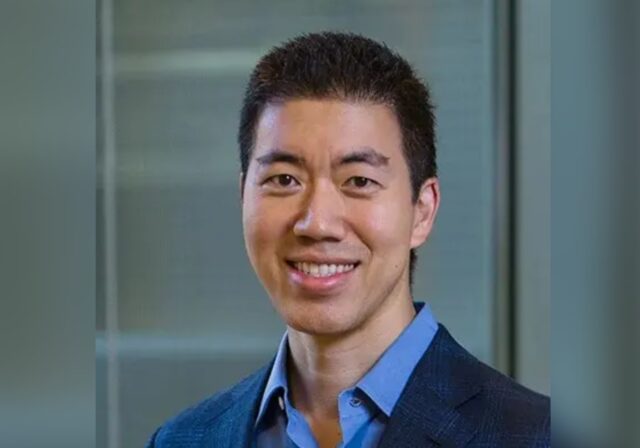
source from Howard Hughes Medical Institute
休斯醫學研究所(Howard Hughes Medical Institute,簡稱HHMI)研究員台裔劉如謙(David Liu),因開發「鹼基編輯」與「精準編輯」兩項基因編輯技術,獲頒2025年生命科學類「突破獎」(Breakthrough Prize in Life Sciences),技術已成功應用於白血病、鐮刀型紅血球貧血等多項遺傳疾病治療,成為全球15項相關臨床試驗的重要基礎。該獎項每項獎金為300萬美元。
HHMI所長歐雪(Erin O’ Shea)表示,劉如謙在基因編輯領域的重大突破,展現基礎研究的價值與潛能,研究所全體人員對他獲獎深感欣慰,並期待他持續推動相關領域的進展。
劉如謙於2016年在布羅德研究院(Broad Institute)率領團隊開發「鹼基編輯」技術,能精準修正DNA中的單一鹼基突變,猶如「鉛筆」般改寫分子文字;與需切割DNA的傳統CRISPR/Cas9技術相比,更為細緻與安全。
2019年,他再推出「精準編輯」技術,可進行所有DNA字母的替換,並能插入或刪除基因序列,功能猶如分子層級的「文字處理器」,能進行如「尋找與取代」般的編輯。目前已有來自五國的研究團隊採用其技術進行至少15項臨床試驗,並在T細胞白血病與鐮刀型紅血球貧血等病症上展現療效。
有「科學界奧斯卡」之稱的「突破獎」,是全球最大規模的科學獎項之一,今年邁入第13屆,涵蓋生命科學、基礎物理與數學三大領域。頒獎典禮5日在洛杉磯舉行,現場雲集眾多科技與娛樂界知名人士。
David Liu Awarded Breakthrough Prize
HHMI Investigator who developed groundbreaking gene-editing technologies among eight honored for transformative advances in the life sciences.
Howard Hughes Medical Institute (HHMI) Investigator David R. Liu was awarded the 2025 Breakthrough Prize in Life Sciences for developing two gene-editing technologies – known as base editing and prime editing – which enable the correction or replacement of virtually any genetic mutation, including those that cause countless human genetic diseases.
“David Liu’s advances in gene editing represent fundamental, curiosity-driven research at its best,” says HHMI President Erin O’Shea. “All of us at HHMI congratulate him on this honor and look forward with great anticipation to what he will accomplish next.”
In 2016, Liu’s lab at the Broad Institute developed base editing, a technique that allows scientists to correct single-letter mutations in DNA – the kind of tiny genetic “misspellings” that underlie thousands of human diseases. Whereas some genome-editing tools like CRISPR/Cas9 function as scissors that cut both strands of DNA and rely on the cell’s own molecular machinery to fill in the gap with the desired DNA sequence, Liu says base editors are like pencils that enable scientists to rewrite individual chemical units of DNA known as bases.
Just three years after developing base editing, Liu and his lab invented prime editing.
While scientists can use base editors to make certain DNA letter “swaps,” prime editors enable them to carry out every possible kind of DNA letter change in mammalian cells, in addition to inserting or deleting genomic text.
Likening prime editors to molecular word processors, Liu once described this technology as enabling a “search and replace”: scientists can locate the stretch of DNA they wish to target and trade old letters for new ones of their choosing.
“David Liu’s pioneering work in base and prime editing has transformed genome editing, creating new approaches for treating genetic diseases while revolutionizing the fields of biomedicine and agriculture,” says HHMI Chief Scientific Officer Leslie Vosshall. “The profound reach of his work will shape science for generations to come.”
The impact of Liu’s gene-editing platforms has already been felt far beyond his lab. Research teams around the world have tapped these technologies to make advances in human health. Currently, there are at least 15 base editing and prime editing clinical trials in five countries, with beneficial results already confirmed in patients for the treatment of T-cell leukemia, sickle cell disease, and others.
Liu was honored along with eight Prize laureates in the Life Sciences category at the Breakthrough Prize award ceremony at the Barker Hangar in Santa Monica, California on April 5, 2025.
Renowned actresses Jodie Foster and Lily Collins presented David Liu’s prize, along with surprise guest Alyssa Tapley – the first person to undergo cancer treatment using base editing technology.
In 2021, Tapley became sick with an aggressive form of T-cell acute lymphoblastic leukemia. After undergoing multiple rounds of standard treatment options, Tapley, then 13, was told that the cancer was incurable. But, Tapley’s doctors saw that Great Ormond Street Hospital (GOSH) in the United Kingdom had taken on a base editing clinical trial. At GOSH, researchers used base editing to engineer donor T-cells to attack Tapley’s cancer.
Now, two and a half years later, Tapley credits Liu and her care team with her survival.
“I’m 16, preparing for my exams, spending time with my family, arguing with my brother, and doing all the things I thought that I would never be able to do,” she said before presenting Liu with his Breakthrough Prize. “But most importantly, I have a future, and tonight I get to join you all to celebrate the man whose work saved my life.”
For the 13th year, the Breakthrough Prize celebrates the research achievements of the world’s top scientists. Each Breakthrough Prize is $3 million and presented in the fields of Life Sciences, Fundamental Physics, and Mathematics. To reinforce the cultural importance of their scientific achievements, winners are honored at a gala awards ceremony attended by celebrated leaders in business, technology, and entertainment, earning it the nickname the “Oscars of Scienceexternal link, opens in a new tab.”
Liu joins a distinguished group of HHMI Investigators who have won Breakthrough Prizes in previous years. Most recently, Clifford P. Brangwynne, an HHMI Investigator at Princeton University, received the Breakthrough Prize in Life Sciences in 2023. HHMI Investigator and 2024 Nobel Prize laureate David Baker, who won the Breakthrough Prize in 2021, was also honored during the gala. HHMI Investigator Huda Zoghbi, a 2017 Breakthrough Prize laureate, was also in attendance.
Source from World Journal、Howard Hughes Medical Institute
Posted on 5/15/2025